
14 August 2026
Why Peak Demand Matters When Planning Commercial EV Charging
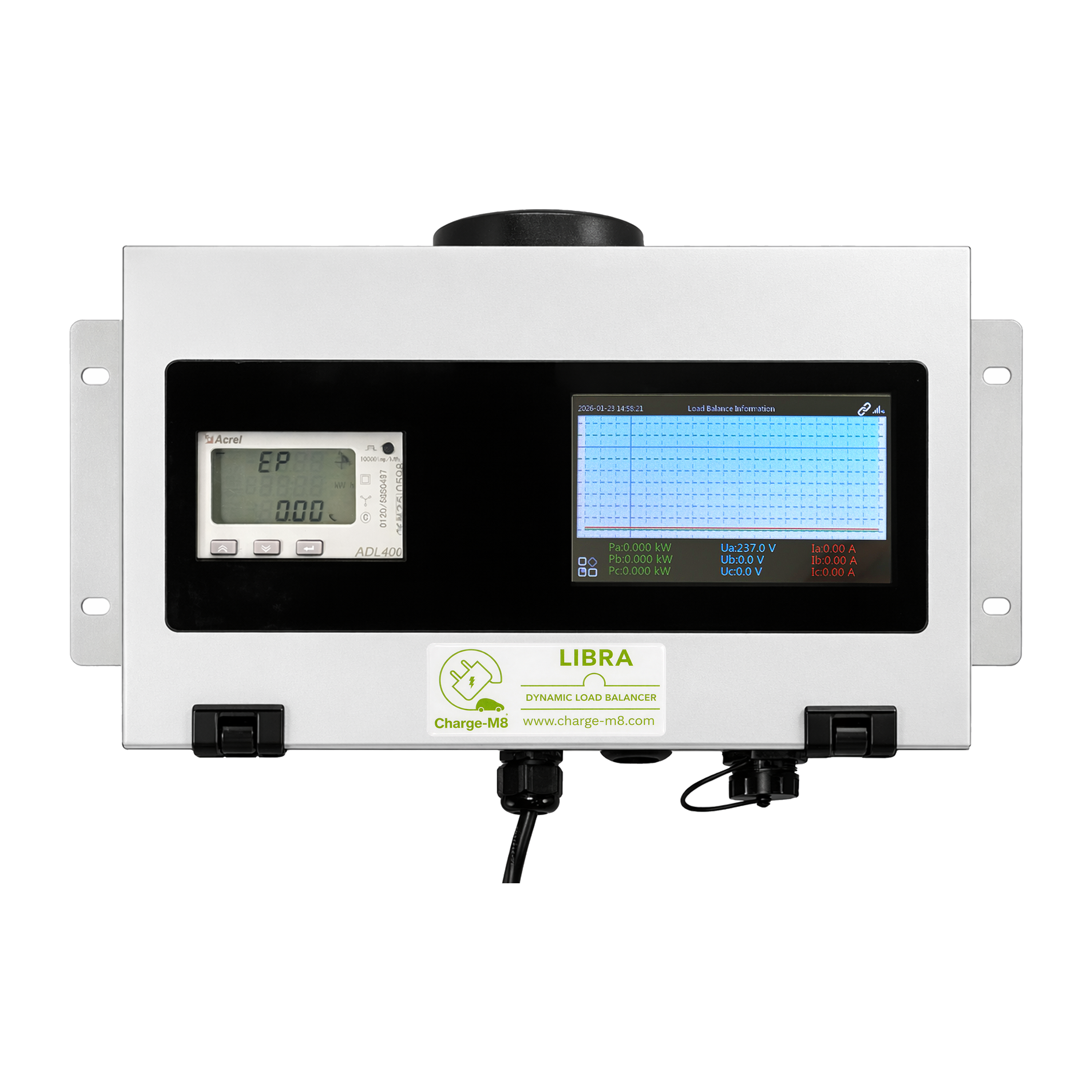
A look at how Charge-M8 Libra manages changing building electricity demand in real time, making more capacity available for EV charging without over- or under-allocating power.
When planning EV charging for a workplace, fleet depot or commercial building, the number of chargers is only part of the electrical calculation. The same incoming supply may also be supporting heating, lighting, ventilation, machinery and other building systems, and these loads do not remain constant throughout the day.
Designing around theoretical maximum demand can leave useful electrical capacity unused for long periods, while ignoring peak periods can increase the risk of exceeding the site's available supply. Charge-M8 Libra addresses this through real-time dynamic load balancing.
Continuous Monitoring
Tracks actual building consumption, not a fixed assumption.
OCPP Integration
Live data sent to the platform every few seconds.
Responsive Charging
Chargers update continuously as capacity changes.
Fleet-Ready
Manages simultaneous demand from multiple vehicles.
The Problem With Fixed Limits
Why Fixed Capacity Can Be Inefficient
Consider an office where electricity demand rises sharply when heating, catering equipment and other building services operate simultaneously. At another point in the day, those loads may fall considerably.
Giving EV chargers a fixed power allowance does not respond to this variation. A conservative fixed limit may leave available capacity unused during quieter periods, while a higher fixed allocation may create problems when building demand approaches its peak.
Fixed Charging Allowance
- Set once, regardless of demand
- Wastes capacity during quiet periods
- Risks overload during peak periods
Libra
- Monitors actual building load
- Reallocates capacity as demand changes
- Updates continuously via OCPP
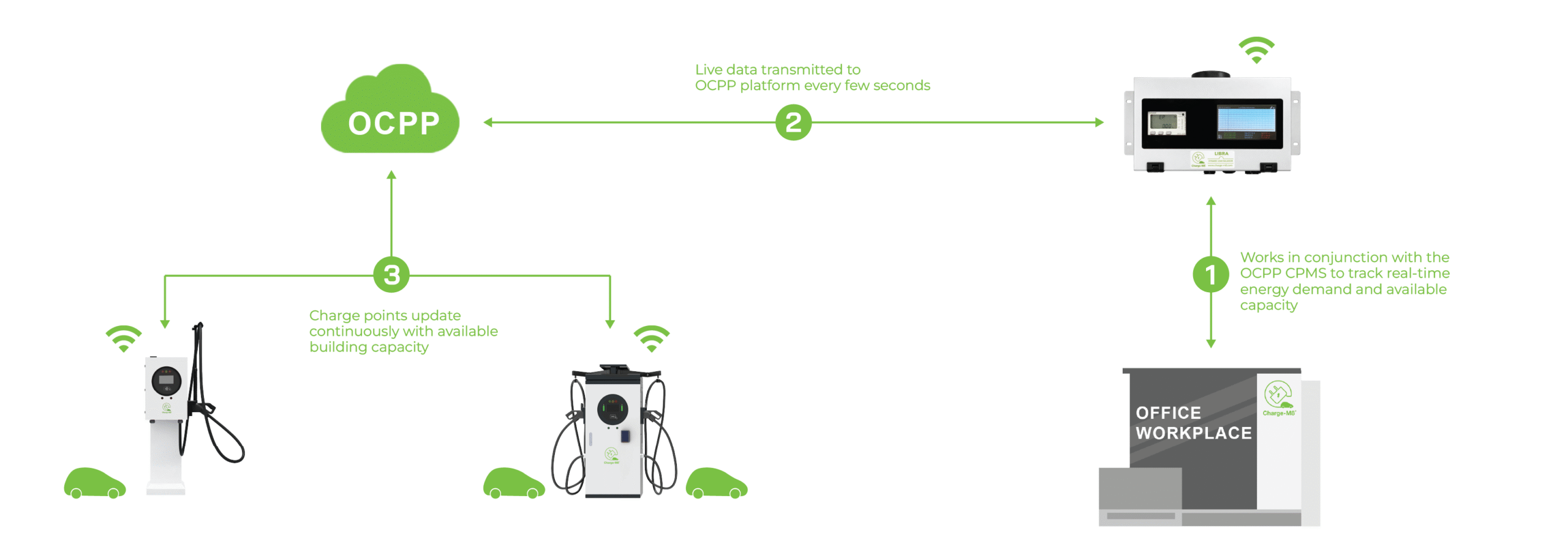
Libra monitors the actual building load rather than relying only on a fixed assumption. Live information is transmitted to the OCPP platform every few seconds, allowing connected charge points to update continuously according to the capacity currently available.
How It Responds
What Happens When Building Demand Increases?
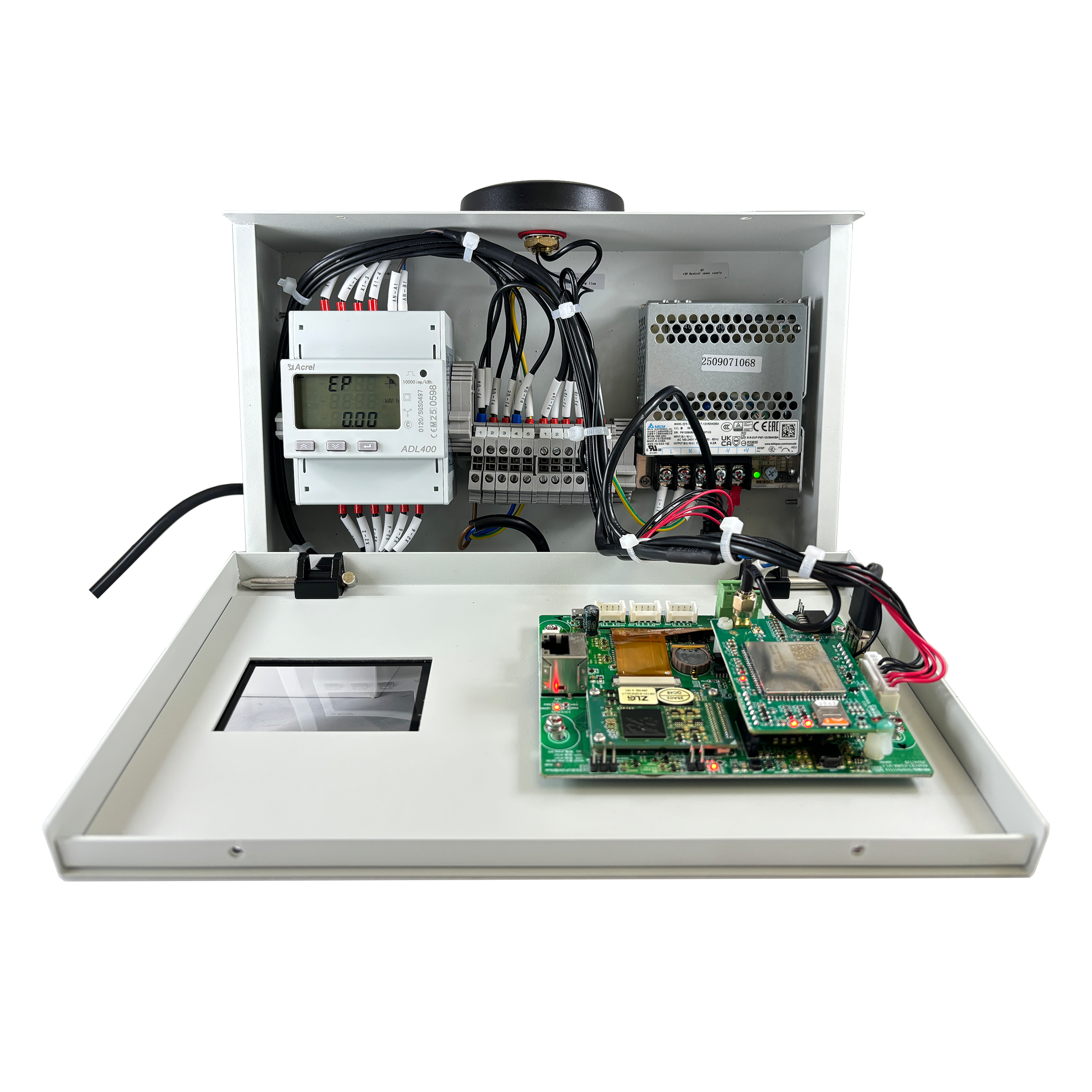
Libra is designed specifically as a dynamic load and data transmission device. Through direct OCPP platform integration, it transmits live site data so that the maximum capacity allocated to EV charging can reflect actual demand.
When the building requires more electricity, the charging system can respond by managing the capacity allocated to EV chargers. When building demand falls, additional available capacity can again be used for charging. The objective is not simply to reduce charger power, but to use the site's electrical supply more intelligently while helping prevent overload events and associated business disruption.
Fleet Charging
Why This Matters for EV Fleets
Peak-demand management becomes particularly important for fleet charging. Multiple vehicles may return to a depot within a similar time window and begin charging while the building itself remains operational. Without load management, simultaneous demand from the fleet and facility can create a much higher electrical peak.
Dynamic load balancing allows charging demand to be considered alongside the rest of the site. This can help organisations make better use of existing electrical infrastructure before assuming that additional charging points automatically require an expensive supply or grid upgrade.
A proper site assessment is still essential, and dynamic load balancing cannot remove every capacity constraint. However, understanding actual demand is an important first step before investing in additional electrical infrastructure.
Make Site Capacity Part of the Charging Strategy
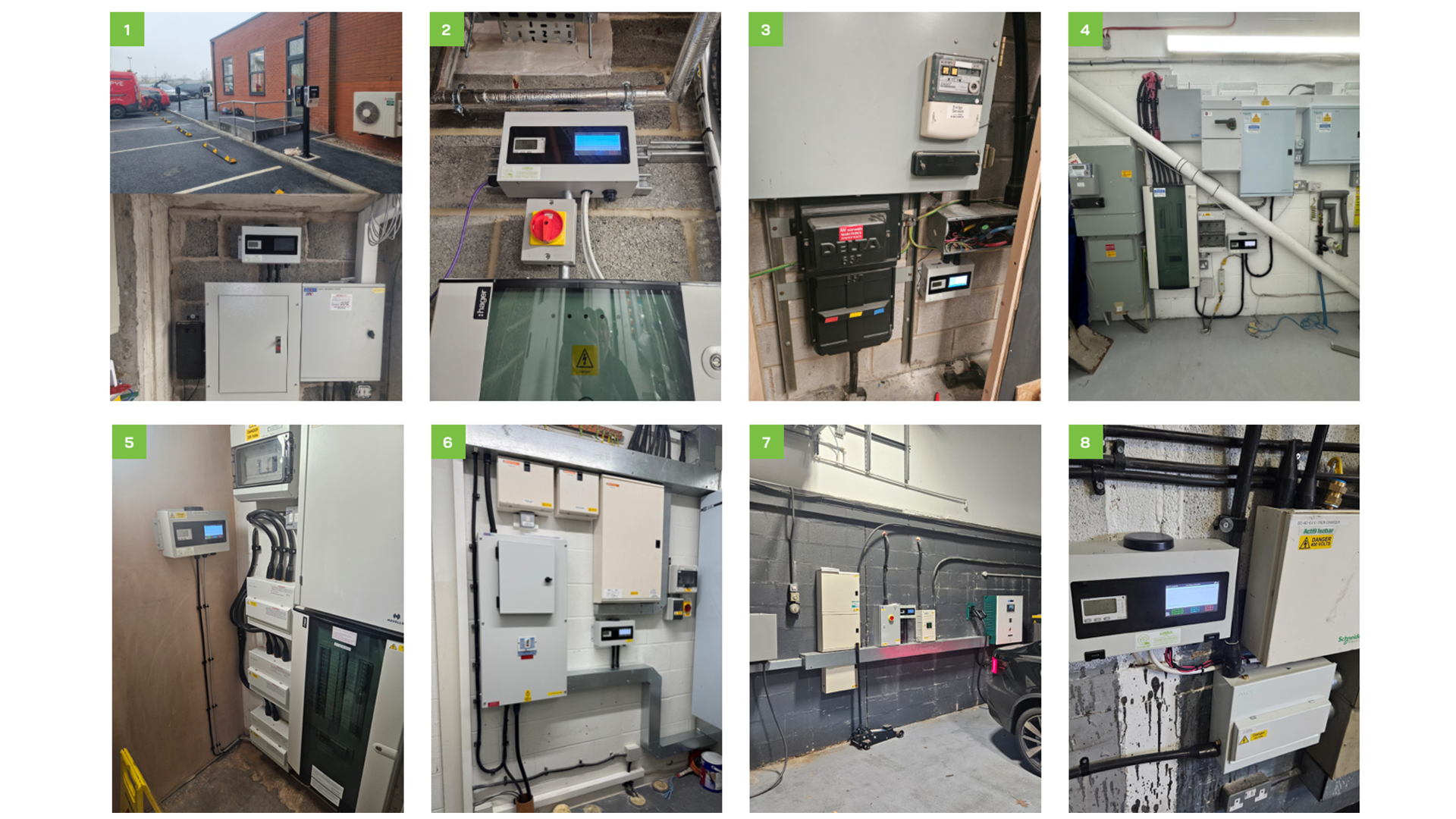
Commercial EV charging should be planned around how a building actually consumes electricity, not simply the combined maximum rating of its chargers. By continuously monitoring building demand and transmitting live data to an OCPP platform, Libra helps charging infrastructure respond as available capacity changes.
For workplaces, fleets and commercial sites planning larger EV networks, this turns load management into part of the site's wider energy strategy rather than a problem addressed after installation.
Resources & Proof Points
Links & Resources
- Analysis How Charge-M8 Libra Solves Commercial Site Capacity Problems?
- Award EVIES 2025 Finalist & ECN Awards Shortlisted
- Study Tap Electric & Charge-M8 Doubled EV Charging Capacity for a Leading UK Motor Group
- Partnership Charge-M8 × Nemiah: Delivering Smart, Integrated EV and Building Energy Management
- Video Unboxing and Introduction Video: Libra Dynamic Load Balancing Device
- eFIXX The Mistake That Wrecks EV Charger Installs, and How Dynamic Load Balancing Fixes It