
Independent Study | Charge-M8 × The University of Manchester
Independent University Study: Evaluating the Structural Performance of EV Kube Modular EV Charger Foundation
16 March, 2026
Study Overview
Prior to the commercial launch of EV Kube, Charge-M8 collaborated with researchers from the University of Manchester School of Engineering to independently assess the structural stability and real-world performance of the system.
Charge-M8 researched wind-tunnel facilities across the UK and, through the Greater Manchester Growth Hub Innovation Scheme, established a working relationship with the University of Manchester team.
Central Research Question
Can a lightweight modular foundation deliver benchmark stability and reliability comparable to traditional concrete bases, while significantly reducing installation time, cost, and environmental impact?
To evaluate this, two independent engineering studies were undertaken to analyse the structural performance and practical advantages of the EV Kube modular foundation system.
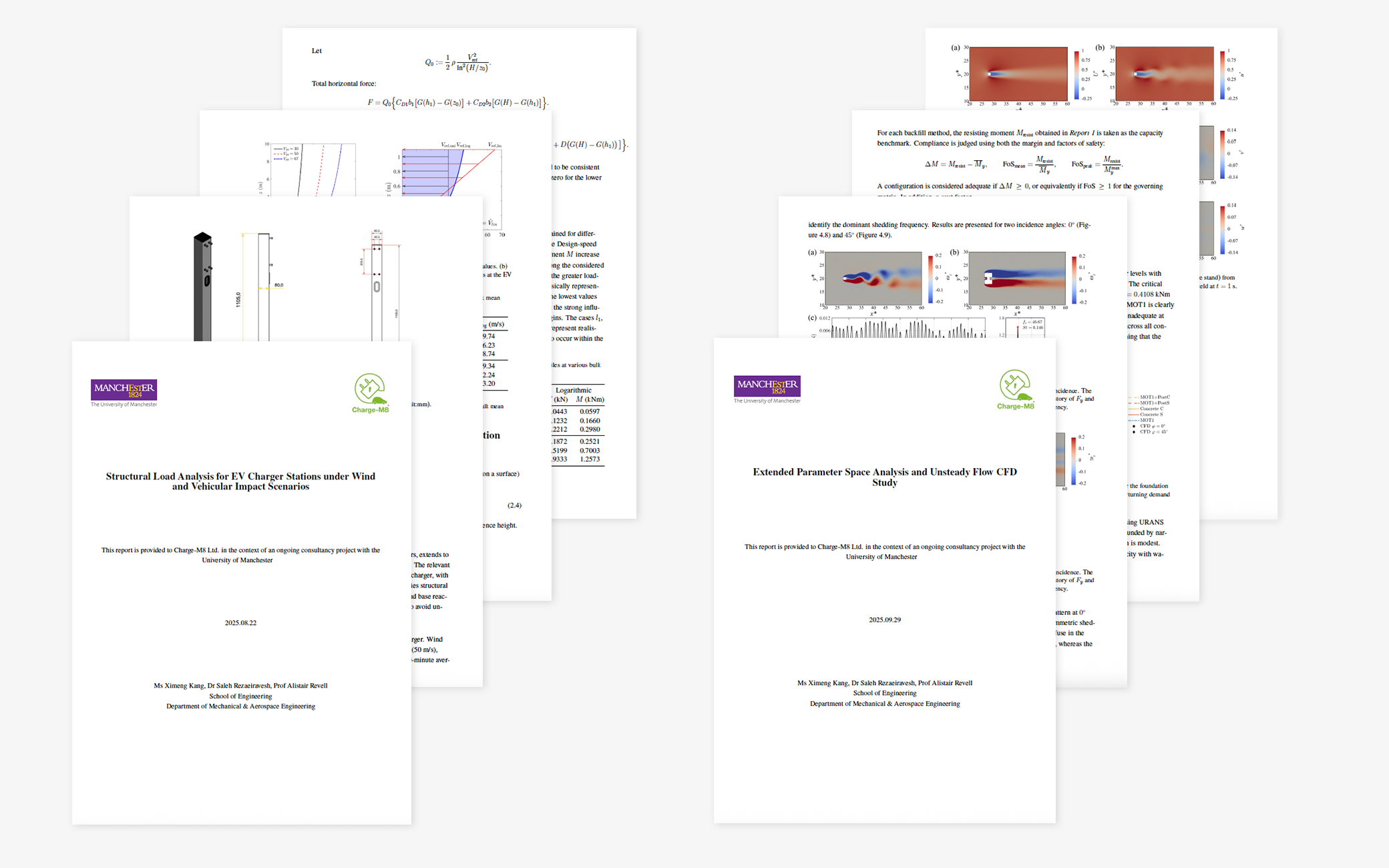
Importantly, the test parameters used a deliberately high surface-area twin-charger configuration to reflect real-life installations: an epark Engineering multi-post combined with twin NexBlue chargers, forming a large dual-charger assembly with a significantly greater wind-exposed surface area than a standard single-charger unit. A smaller installation would therefore be expected to deliver even more favourable results.
Methodology
Two complementary engineering studies were designed to cover both analytical load assessment and advanced simulation-based validation:
Study 1: Structural Stability & Impact Analysis
Mechanical engineering analysis evaluated critical real-world loading scenarios, including:
- Wind loading acting on charger posts and equipment
- Structural response of the EV Kube foundation system
- Potential vehicle impact scenarios in public car parks
- Stability performance under different backfill methods and soil conditions
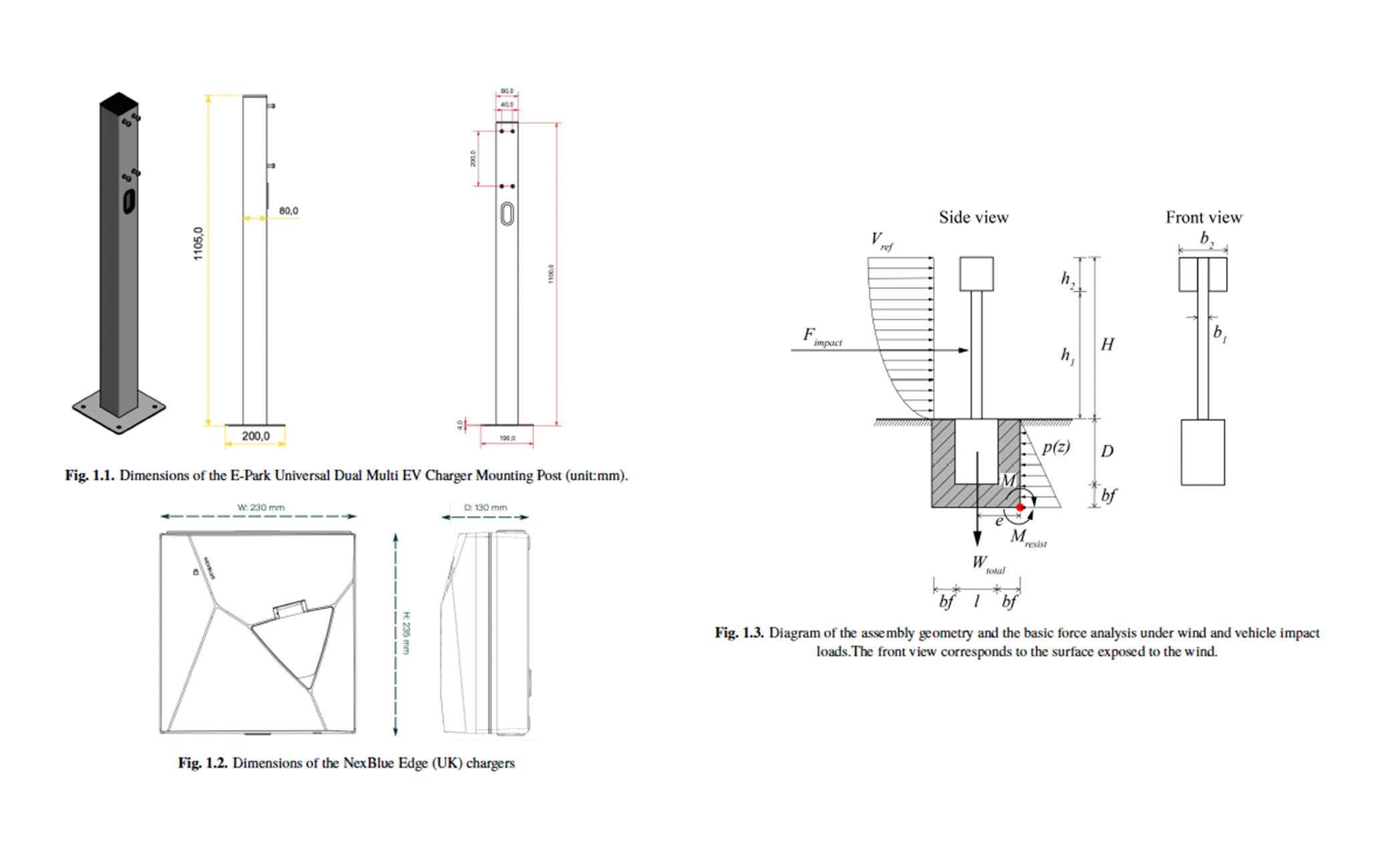
The analysis compared overturning loads generated by wind and impact forces against the resisting moment provided by the EV Kube foundation system, validating the system's mechanical integrity across a range of demanding scenarios.
Study 2: Advanced Wind Simulation (CFD Analysis)
The second study extended the analysis using Computational Fluid Dynamics (CFD) to model the precise interaction between wind and installed charging infrastructure. Researchers simulated airflow around EV charger stations under varying wind speeds and approach angles using advanced turbulence modelling.
Key areas of investigation included:
- Realistic atmospheric wind profiles and boundary layer behaviour
- Aerodynamic forces acting on the charger structure
- Wake behaviour and vortex shedding behind the charger body
- Surface pressure distribution across the equipment
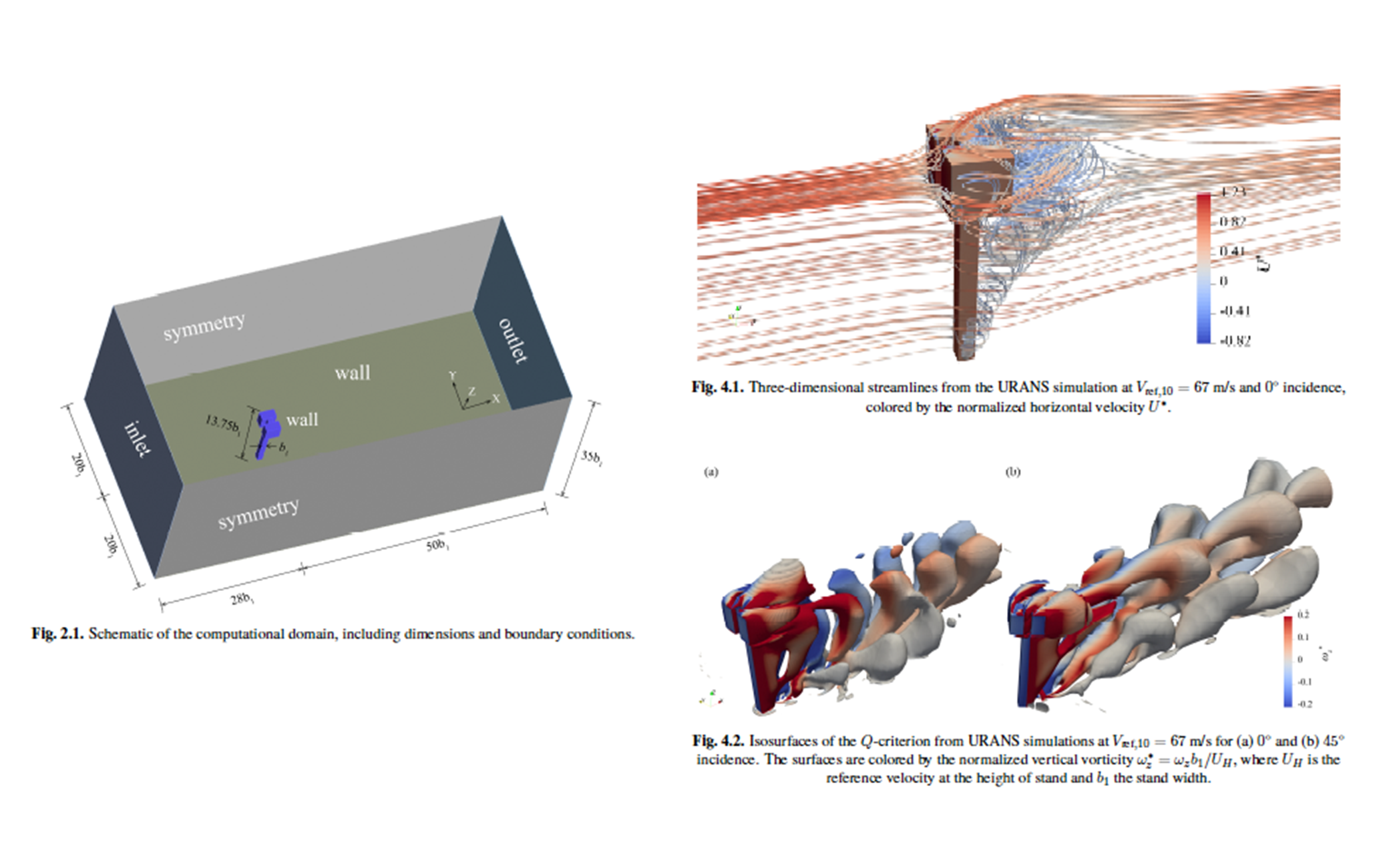
These simulations enabled critical wind scenarios to be identified and the analytical calculations from Study 1 to be independently validated.
Key Findings from Independent University Testing
- EV Kube withstands wind speeds equivalent to a severe tropical storm, achieving a structural safety factor of nearly 2.0
- Structural stability validated across all tested wind speeds, angles, and turbulence conditions
- Foundation system resisting moment exceeds overturning loads generated by both wind and vehicle impact scenarios
- Performance confirmed across multiple backfill methods and soil conditions
- Results validated using industry-leading CFD analysis by the University of Manchester
Note: Test parameters were based on a twin Nexblue charger configuration on an epark Engineering multi-post, a large dual-unit assembly with a substantially greater wind-exposed surface area than a typical single charger. The results therefore represent a demanding real-world scenario.
What This Means for Installers & Infrastructure Developers
For installers and infrastructure developers, foundation systems directly affect:
- Installation time and programme certainty
- Total project cost and groundworks requirements
- Health & safety risk on site
- Environmental impact and site disruption
Traditional concrete foundations typically require heavy plant, wet-pour processes, cure times, and significant surface disruption. The University of Manchester findings support what the industry is already discovering in the field: EV Kube removes these barriers without compromising structural integrity.
Because the system is modular and lightweight, installers consistently benefit from:
- Faster deployment, no concrete cure times
- Reduced groundworks, minimal excavation required
- Lower transport and logistics costs
- Simplified installation across a wide range of ground conditions
From the Charge-M8 Team
"The University of Manchester research gave us the independent, rigorous validation we needed to bring EV Kube to market with full confidence. We deliberately chose a challenging test configuration, twin chargers on a multi-post, because we wanted results that reflect the toughest real-world installations. The findings exceeded our expectations and confirm that structural performance, speed of installation, and environmental responsibility don't have to be a trade-off."
— Julian Smith, Managing Director, Charge-M8
Continuous Product Development
Charge-M8 is not resting on the results of this research. A third stage of testing is planned for later this year, using a full-scale wind tunnel facility, large enough to physically accommodate the product, moving beyond CFD modelling to real-world scaled testing. This ongoing programme of independent validation reflects our commitment to pushing the boundaries of what a modular EV charging foundation can deliver.
Summary
Independent analysis with the University of Manchester confirms that EV Kube is:
- Structurally stable under demanding real-world wind and impact loads
- Fast to install with no concrete or wet-pour processes required
- Lightweight to transport, reducing logistics cost and carbon footprint
- Durable and corrosion-resistant across a range of environments
- Independently validated by a leading UK research university
All without the environmental impact and operational complexity of traditional concrete bases.
Learn More
Discover how EV Kube can reduce installation time and total project cost for your EV charging infrastructure.
Ready to upgrade your installation approach?
Get in touch with the Charge-M8 team to discuss your project or request product data sheets.