
February 24, 2026
EV Charger Foundation Cost in 2026: EV Kube Costs Less and Installs Faster
The EV infrastructure market is full of products that promise more than they deliver. Here's exactly why the Charge-M8 EV Kube consistently delivers a lower total installed cost and gets your charger operational faster — no vague claims, just specifics.
We'll be honest: when the Charge-M8 EV Kube launched in 2025, we didn't run big campaigns or splash on advertising. We let the product do the talking — and it did. Strong early sales driven almost entirely by word of mouth and installer recommendations told us what we hoped: when people see it in action, they get it immediately.
When you're planning an EV charging installation, the foundation rarely makes the headline, but it should. Choosing the wrong foundation doesn't just mean higher upfront costs; it also brings additional labour expenses, project delays, and equipment rental fees — not to mention the environmental hazards that come with outdated materials.
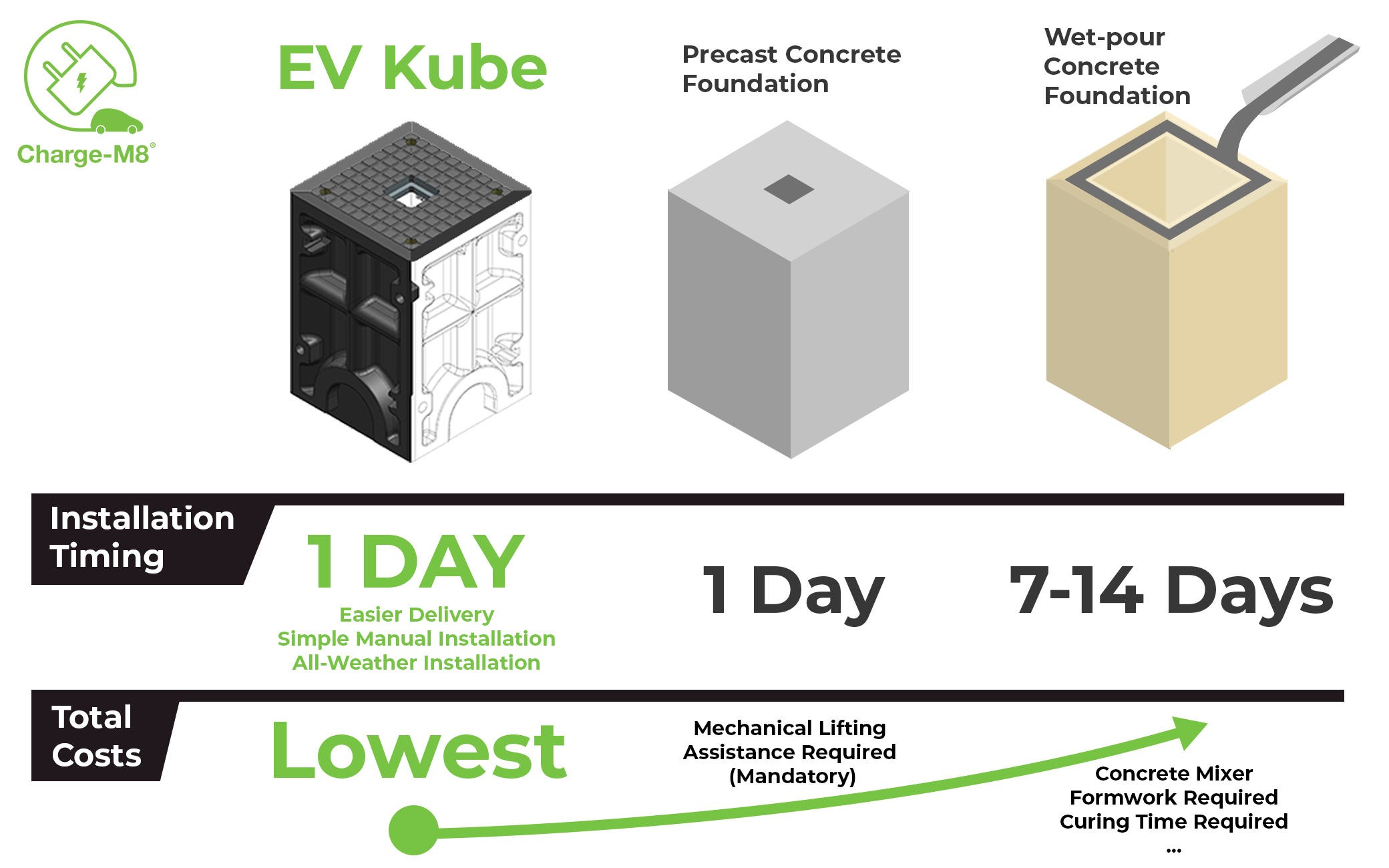
Figure 1: EV Kube vs. Concrete Foundations – Installation Time and Total Cost Comparison
Lower Cost: From Factory to Finished Installation
Ships Like a Parcel
EV Kube's flat-pack design ships via standard courier — no expensive freight logistics, no dedicated delivery vehicles, no scheduling headaches. It arrives the same way a laptop would.
No Plant or Equipment Hire
Every component weighs under 18 kg — fully compliant with UK Manual Handling Operations Regulations 1992. A single installer can complete the job with zero equipment hire.
Engineered for Value
Manufactured from advanced composite with AISI 304 A2 stainless steel fixings. Precision engineering delivers structural strength without excessive weight and bulk.
University-Validated
Tested in conjunction with The University of Manchester - engineering analysis evaluated wind loads, vehicle impact scenarios, and foundation stability across multiple installation conditions.
The result is a foundation that costs less to produce, less to ship, and less to install - while still meeting strict ESG requirements and delivering long-term durability. No cracking, no leaching, and no corrosion.
Faster Installation: One Person, One Day
EV Kube's modular construction means installation is a logical, sequential assembly process with no mixing, no pouring, and no waiting for a second pair of hands.
- One Person. No Machinery. Done. Single-person installation isn't just convenient; it's a meaningful cost saving. Fewer workers on site means a lower labour cost per job.
- No Curing Time. Zero. The assembly is structurally stable within minutes, allowing the charger to be mounted the same day — no return visit required.
- Ready to Use in One Day From starting excavation to a working charger in 1 day. Wet pour concrete typically spans 9–12 days once curing and return visits are accounted for.
For commercial deployments or network rollouts, this difference is enormous. Faster installation per site means faster revenue per charger.
Practical Comparison Overview
Using a mini-size foundation as the example:
| Wet Pour Concrete | Precast Foundation | Charge-M8 EV Kube | |
|---|---|---|---|
| Delivery method | Specialist haulage | Pallet delivery | Standard courier |
| Workers required | 2–4 | 2–3 | 1 |
| Equipment hire | Mixer, formwork, etc. | Mechanical lifting assist | None |
| Curing / wait time | 24 hrs – 7 days | None | None |
| Total project time | 9–14 days | 1–2 Days | 1 Day |
Table 1: Practical Comparison Overview (Using Mini-Size Foundations as the Example)
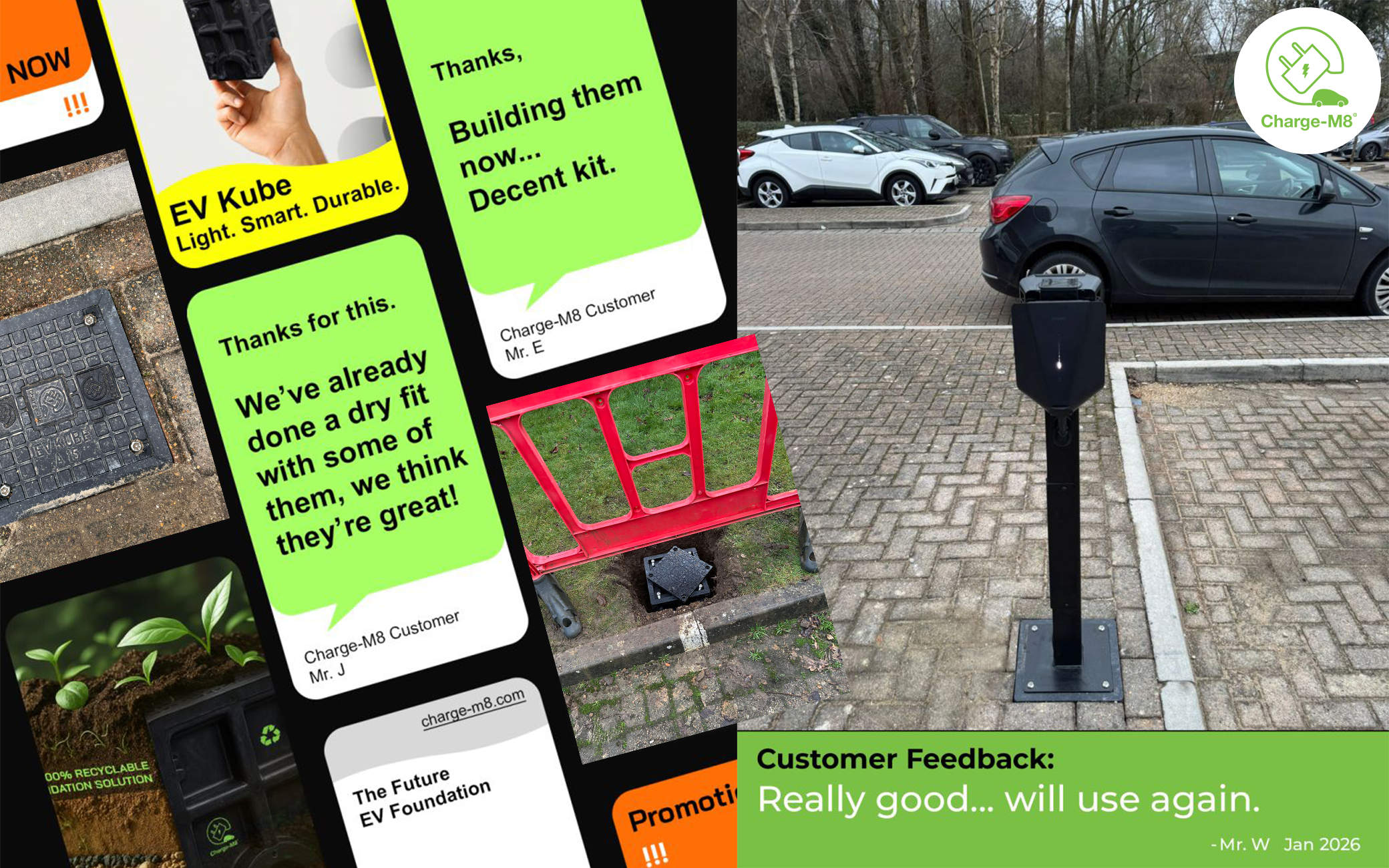
Installation Cases
See EV Kube in action across a range of real-world deployments — from car parks to commercial sites.
The Bottom Line
The Charge-M8 EV Kube costs less and installs faster not because it cuts corners, but because it's been intelligently engineered from the ground up.
- Lower shipping costs via standard courier
- No equipment hire
- Single-person installation
- No return visits needed
- Zero curing time - charger live the same day
Ready to find out more?
Get in touch with the Charge-M8 team to discuss your project or request product data sheets.