28 September 2026
The Work Behind the Charger: Introducing Charge-M8 EV Post
When an EV driver arrives at a charging bay, they see the charger. The installer sees a longer list: the foundation beneath it, the post supporting it, the cables running through it and the space available to make a safe connection.
These supporting products rarely attract the same attention as chargers or software. Yet their design affects how a site is delivered, how easily equipment can be maintained and what happens when a component needs replacing. At Charge-M8, we believe they deserve the same scrutiny as the technology they support.
EV Kube
We started beneath the ground
That thinking led us to EV Kube. A charger foundation is usually buried and seldom seen again, but installing one can involve heavy materials, specialist handling and time on site. We asked whether the foundation could be designed around the way installers actually work.
EV Kube uses modular composite components that can be transported and assembled on site without handling a single heavy precast block. Depending on the ground conditions and installation design, it can also avoid a wet-pour concrete base and its curing delay. The foundation has since been assessed through independent University of Manchester engineering work covering structural performance, wind loading and different installation conditions.
EV Kube showed us what could change when we reconsidered a familiar piece of infrastructure. It also raised the next question: what about the post above it?
EV Post
Bringing the same thinking above ground
A charger post spends its working life outdoors. Installers need enough access to route and connect cables inside it, then return for inspection or maintenance. For site owners, durability matters long after the installation team has left.
Those practical needs shaped our new EV Post. We chose composite construction to provide an alternative to conventional metal posts, with resistance to rust and corrosion. Its electrically non-conductive structure is also a deliberate consideration for equipment that people may come into contact with. Electrical protection, including the response to PEN faults, must still be assessed as part of the complete installation.
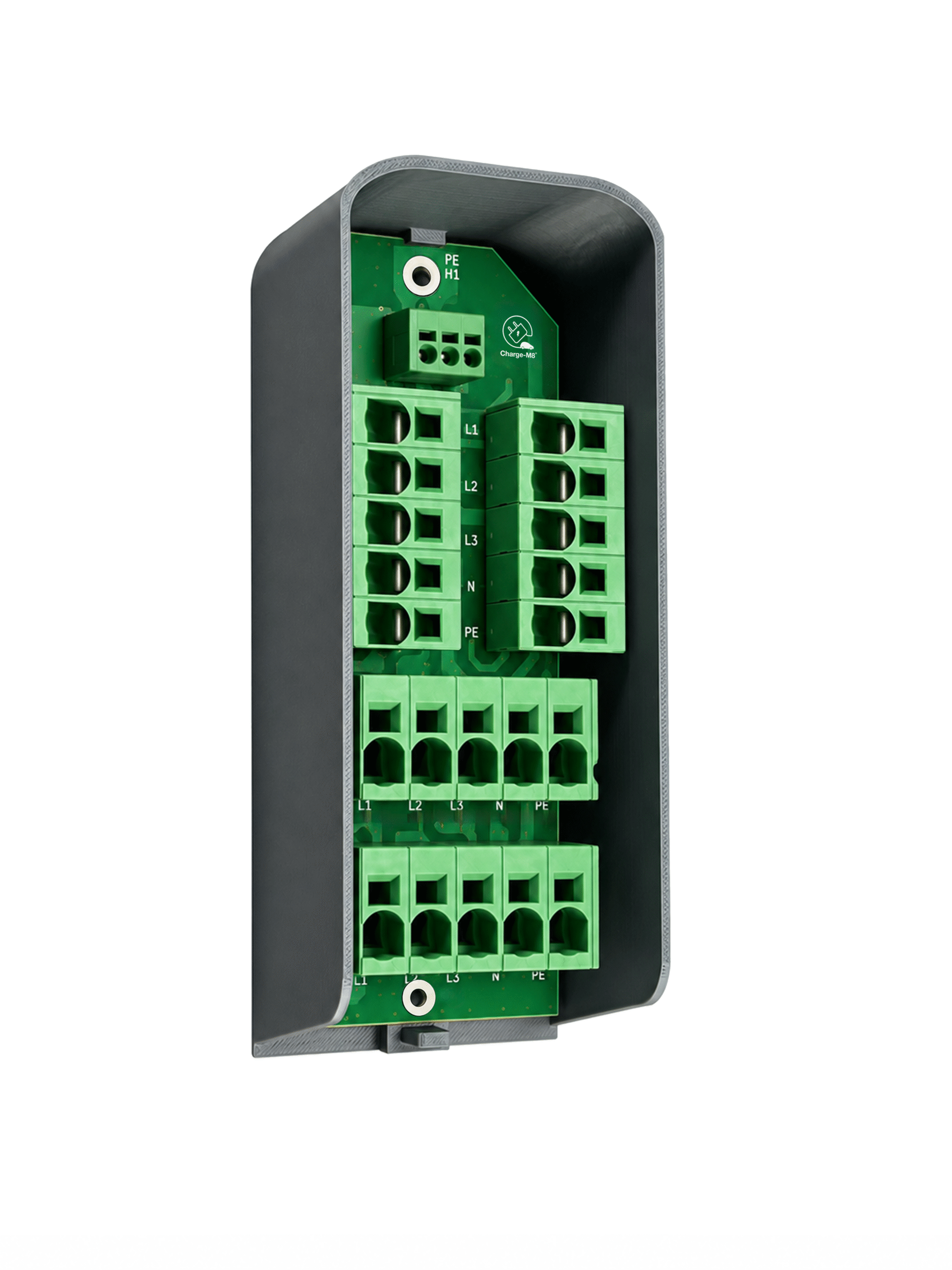
We paid particular attention to the back of the post. A full-length rear access panel gives installers room to route and manage cabling and makes those connections easier to reach later. Inside, a Charge-M8 designed power distribution board provides a dedicated point for organising electrical connections.
EV Post is designed to fit directly onto the EV Kube cover by hand, without lifting equipment for the post. Together, they form a foundation and mounting system designed to make the work at ground level and above it more straightforward.
EV Charge Live 2026
Introducing EV Post
We unveiled EV Post at EV Charge Live 2026 in Birmingham. It is the next step in our work on the parts of EV charging infrastructure that drivers may never think about, but installers rely on every day.
A better charging experience begins well before anyone plugs in. It begins with infrastructure that has been considered from the ground up.